Navigating the new world of hybrid work requires more than just updated policies. It demands new, innovative ways to foster genuine human connections and build a thriving company culture, no matter where your talent is located.
The traditional office-centric model is no longer the default. Today's workforce is a complex blend of remote, in-office, and hybrid structures. While this flexibility has revolutionized talent acquisition and employee satisfaction, it has also introduced a critical challenge: the connection gap.
For HR leaders, this gap is a significant hurdle. Without the spontaneous "water cooler" moments and face-to-face interactions, employees can feel isolated, and company culture can dilute. This guide explores the modern hybrid landscape, the specific challenges it presents, and how equipping your workforce with tools like Signify digital business cards can bridge the divide.
The Modern Work Landscape
Understanding the distribution of work models is the first step for HR leaders to adapt their talent management strategies effectively. Recent global data shows that the workforce is no longer predominantly in-office.
| Work Model | Global Average | HR Implications |
|---|---|---|
| Hybrid | 52% | Requires seamless synchronization between physical and digital touchpoints. |
| Fully Remote | 28% | Relies entirely on digital tools for networking, culture-building, and collaboration. |
| Fully In-Office | 20% | Still benefits from paperless, standardized networking tools. |
With 80% of the workforce operating outside the traditional office at least part of the time, HR must ensure that every employee has the tools to represent the company professionally and connect with colleagues effortlessly, regardless of their location.
The Connection Gap: Employee vs. Manager Perspectives
The shift to hybrid work hasn't just changed where we work; it has changed how we relate to our work and our colleagues. These challenges are felt differently by employees and their managers, creating a complex problem for HR to solve.
| Employee Challenges | Manager Challenges |
|---|---|
| 68%: Lack of spontaneous interaction. | 71%: Maintaining team cohesion. |
| 62%: Difficulty building relationships. | 65%: Onboarding new hires effectively. |
| 55%: Feeling disconnected from culture. | 59%: Ensuring equal opportunities for remote staff. |
| 48%: Fewer networking opportunities. | 52%: Gauging employee engagement. |
| 41%: Onboarding challenges. | 45%: Facilitating cross-team collaboration. |
The data reveals a stark reality. Employees miss the organic relationship-building that happens in a shared physical space, while managers struggle to maintain culture and integrate new hires into a dispersed team. HR's mission is to build bridges across this divide.
Bridging the Divide with Technology
Closing the connection gap requires intentional effort and the right tools. Implementing connectivity tools isn't just a perk; it directly impacts key business metrics.
| Business Metric | Improvement with Connectivity Tools |
|---|---|
| Employee Engagement | 75% improvement in reported connection and inclusion. |
| Talent Retention | 68% reduction in turnover related to isolation. |
| Company Culture | 80% stronger alignment with core values. |
| Productivity | 65% increase in cross-departmental collaboration. |
| Onboarding Speed | 72% faster time-to-productivity for new hires. |
The Role of Digital Business Cards
A Signify digital business card is uniquely positioned to solve the hybrid connection challenge. It acts as a universal connector. When an employee is onboarded, they are immediately issued a branded digital card. This gives them a professional, shareable identity from day one.
Whether they are meeting a colleague on a Zoom call or a client in person, they can share their details instantly using a smart QR code or NFC tap. There is no friction, no manual data entry, and no lost connections.
Rethinking Onboarding: A Connection-First Approach
Onboarding is the most critical moment for establishing connections. In a hybrid environment, HR must move beyond the traditional "first-day orientation" and create a structured, digital-first experience.
Pre-Boarding with Digital Cards
Before the new hire even logs in for their first day, send them a welcome email containing their pre-configured Signify digital card. This simple act accomplishes two things: it makes them feel like part of the team immediately, and it gives them the tool they need to start introducing themselves.
Mentorship and Team Mapping
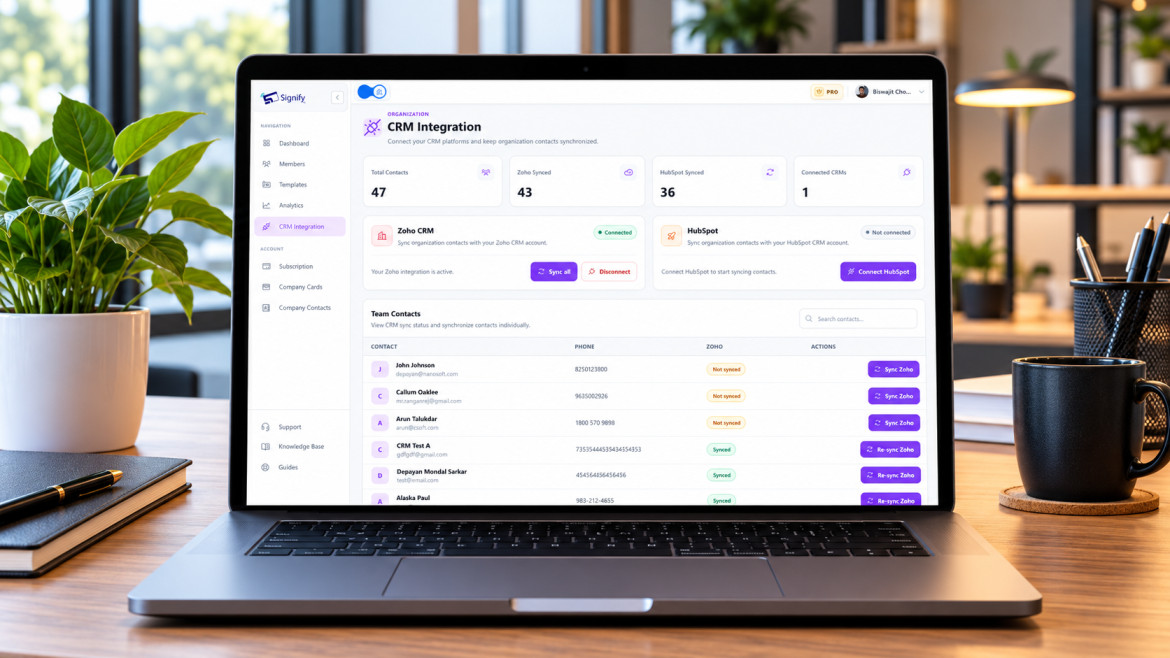
Pair new hires with a mentor and use the digital card's profile to map out the team. By linking to internal directories and showcasing team hierarchies, new employees can easily see who they need to know and how to reach them.
Driving Engagement and Retention
Employee retention is heavily influenced by a sense of belonging. When employees feel connected to their colleagues and their company's mission, they are far more likely to stay.
By standardizing the way your company shares information with a Signify for Teams account, you create a unified culture. Every employee, whether remote or in-office, has the same professional identity and the same ability to connect.
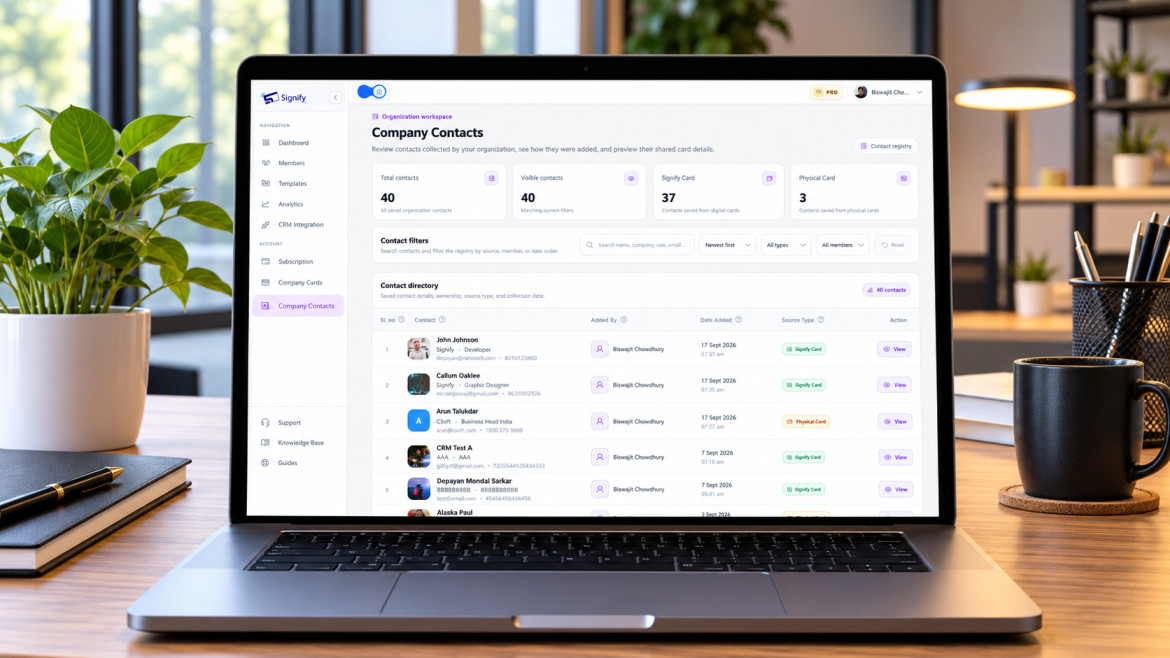
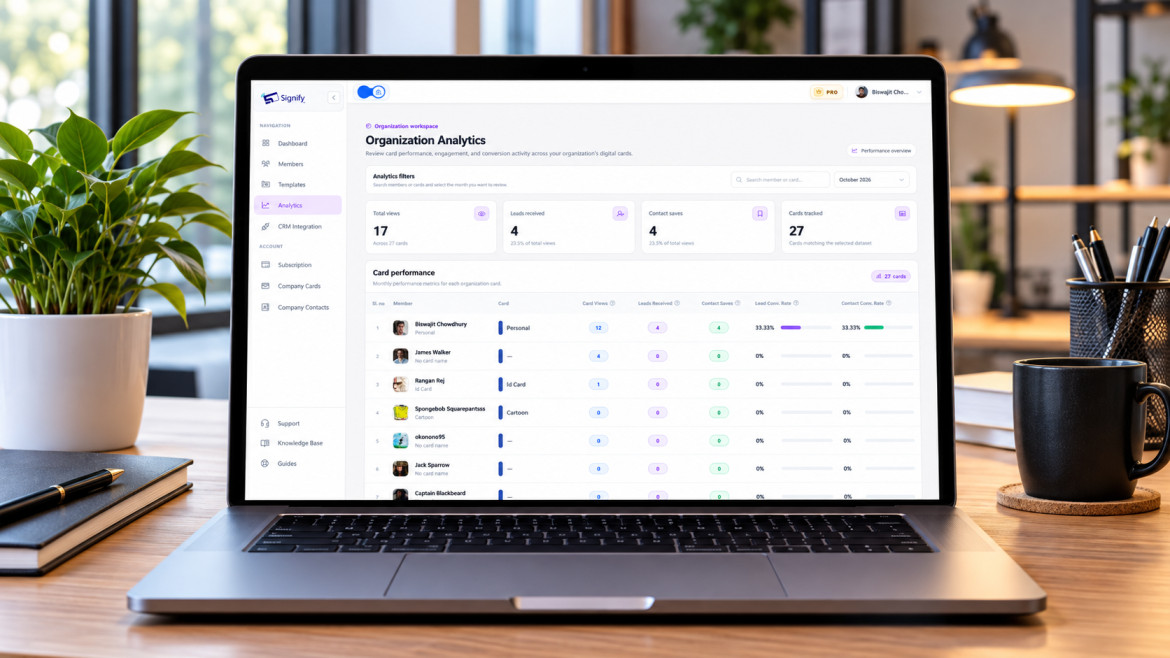
HR leaders can also use the analytics from Signify to measure engagement. By looking at how often cards are shared and viewed, HR can identify which teams are networking effectively and which might need more support in building connections.
Actionable Takeaways for HR Leaders
The path to a successful hybrid model is paved with proactive strategies. Here are the key areas where HR leaders can make a significant impact.
Digitize Your First Impression
Equip every employee with digital business cards to make networking effortless, both internally and externally. This ensures consistent branding and easy contact sharing in any environment. Explore our plans and pricing to find the right fit for your team size.
Facilitate "Intentional" Serendipity
Spontaneous "water cooler" moments are rare in remote settings. Use technology to facilitate intentional cross-departmental introductions and virtual coffee chats to spark innovation. When employees have a digital card, introducing them to someone new is as simple as sharing a link.
Measure What Matters
Use the platform's analytics to track how your team is connecting. Are your remote employees using their cards to reach out? Are new hires sharing their profiles? This data provides tangible insights into the health of your company culture.
Frequently asked questions
How does a digital business card help with hybrid work?
It provides a universal, frictionless way for employees to share contact information and professional profiles, whether they are meeting in-person or virtually. It ensures no connection is lost due to manual data entry.
Can HR enforce brand consistency across the company?
Yes. With Signify for Teams, HR and Marketing can create locked templates, ensuring every employee's digital card adheres to the company's visual identity and brand guidelines.
Is it easy to onboard new hires with Signify?
Absolutely. HR can provision a pre-configured digital card for a new hire before their first day. This immediately integrates them into the company culture and gives them the tools they need to start networking.
Do we need to print physical cards anymore?
While physical cards can still be useful, they are no longer necessary. Digital cards can be shared via QR codes or links, and you can even use NFC business cards for a physical, tap-to-share experience without needing to reprint when information changes.
Build a Connected Hybrid Workforce
Don't let hybrid work create a disconnect in your company culture. Equip your team with the tools they need to build relationships, share their professional identity, and stay connected—no matter where they work.
Explore Signify for Teams